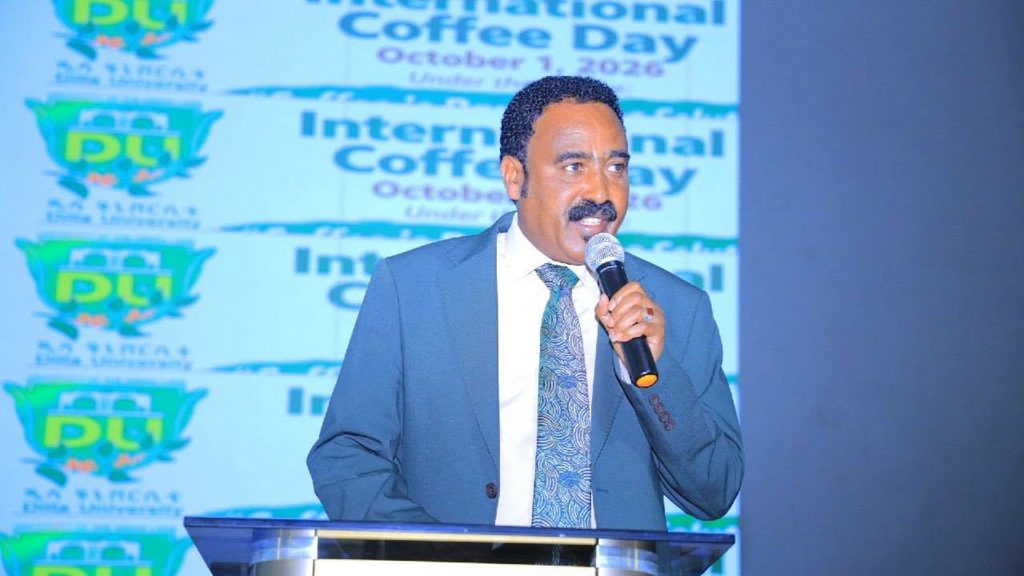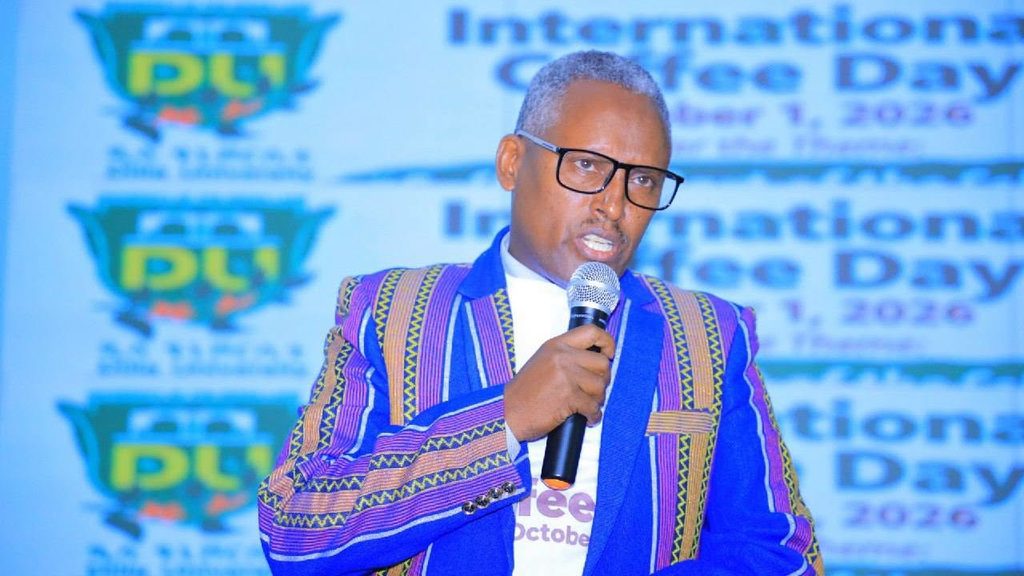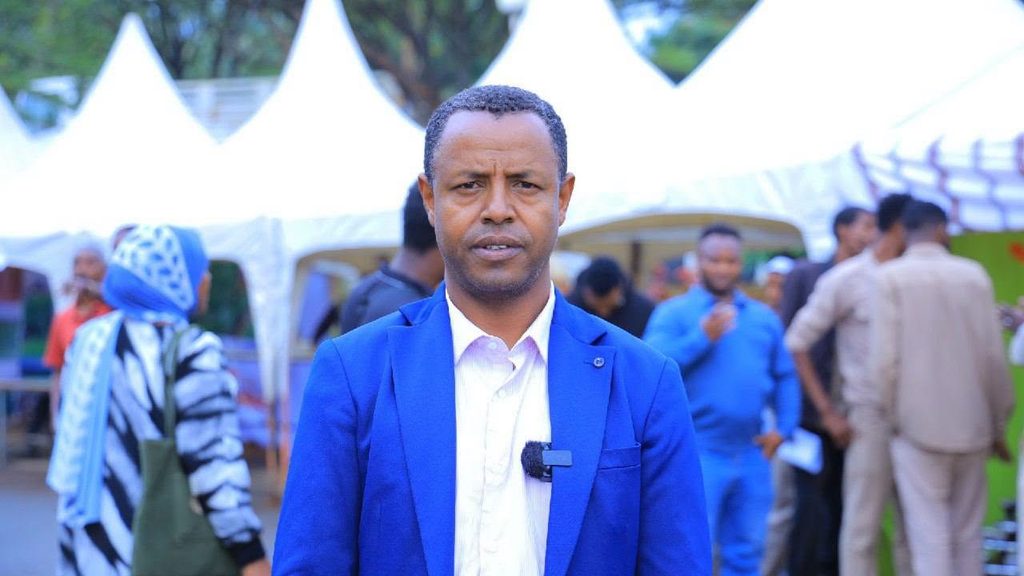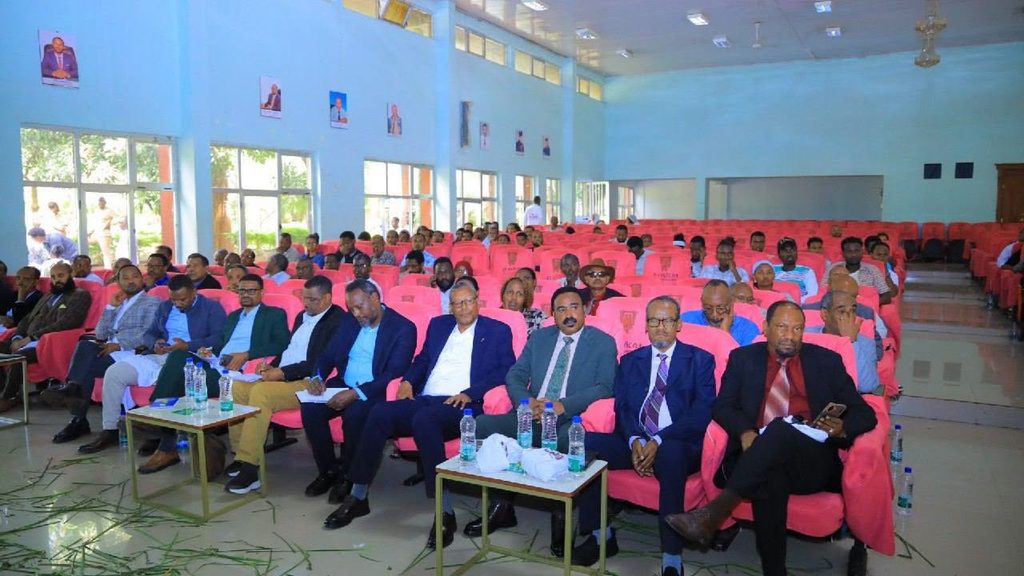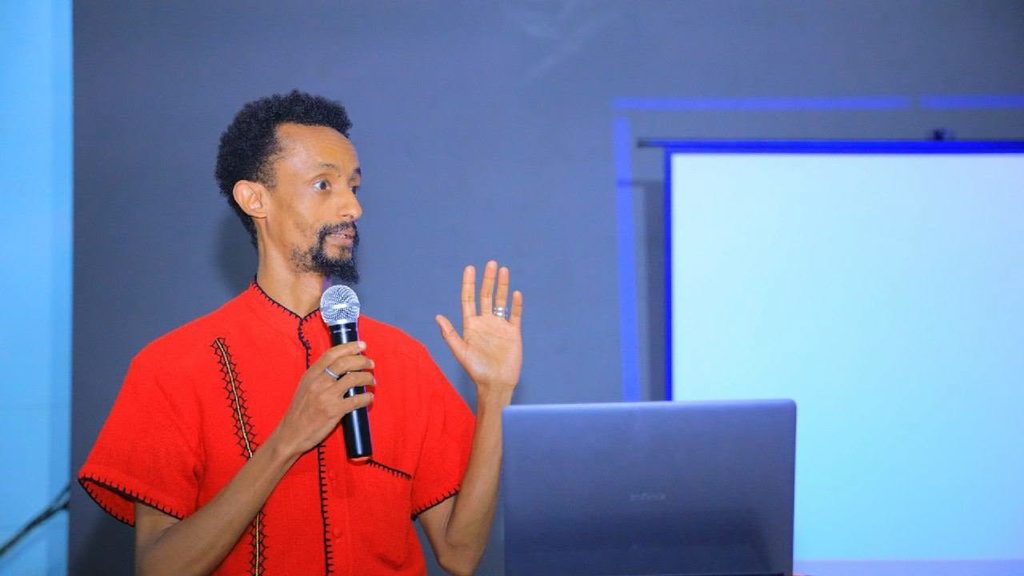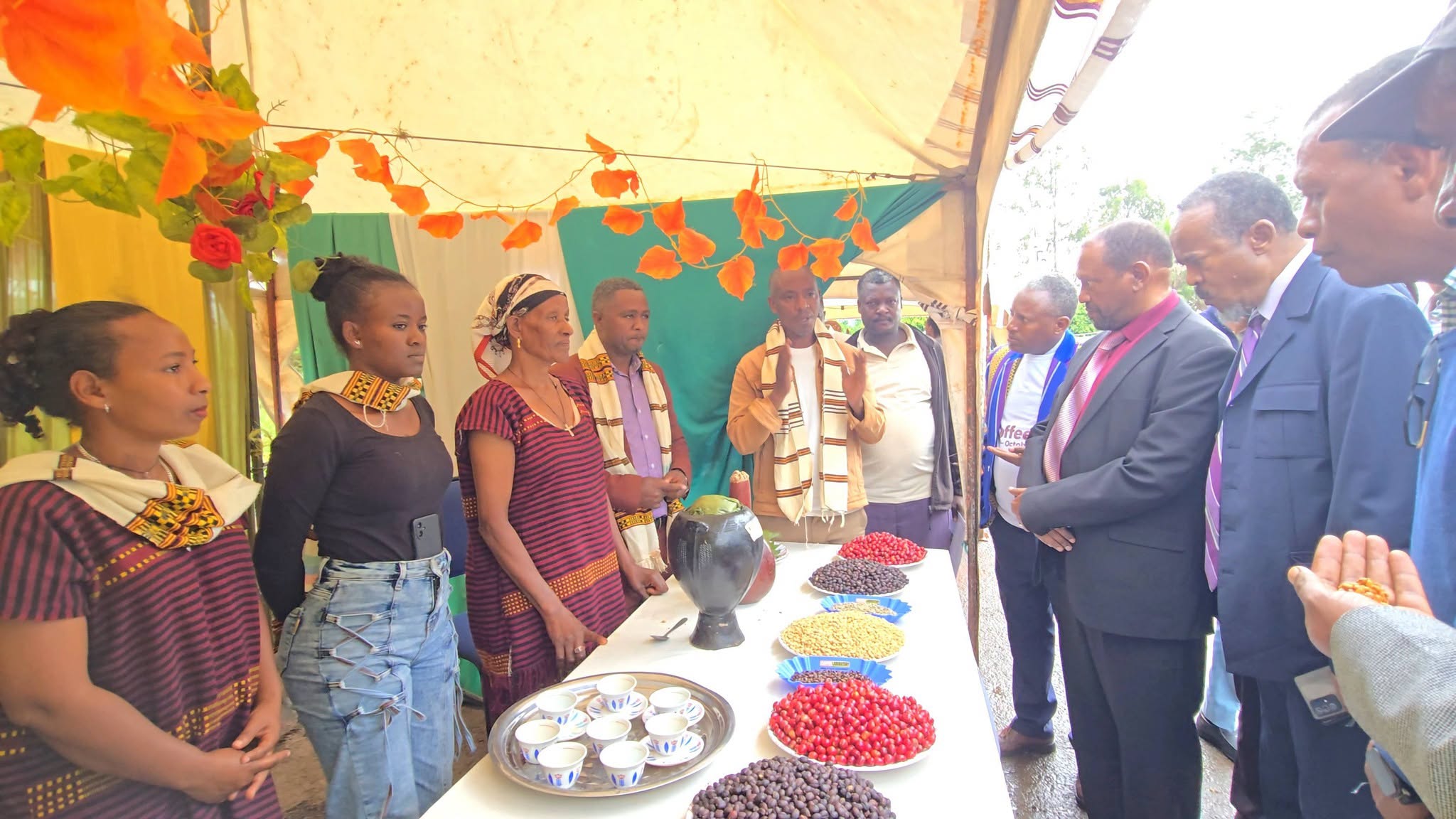
Dilla University hosted the 2026 International Coffee Day Conference on October 1, 2026, bringing together national coffee-sector leaders, academic researchers, smallholder farmers, coffee cooperatives, exporters, trainers, government representatives, development actors, and private-sector institutions under the global theme “Coffee is Part of the Solution.” The event marked the third International Coffee Day celebration at Dilla University and the 12th global observance, featuring an interdisciplinary panel discussion, high-level dialogue, and an interactive coffee exhibition.
Coffee is one of the world’s most important agricultural global commodities and supports the livelihoods of more than 125 million people globally. Beyond its economic importance, coffee is closely connected with rural development, biodiversity conservation, environmental sustainability, and community livelihoods. The 2026 global theme, “Coffee is Part of the Solution,” therefore emphasizes the potential of sustainable coffee production to contribute to responses to global challenges, including climate change, environmental degradation, and rural economic vulnerability.
In his opening address, Dilla University President Tolossa Dadhi (PhD) emphasized that coffee is a livelihood, a cultural heritage, and a vital economic driver. He stressed the responsibility of protecting coffee quality, natural resources, and the future of coffee-producing communities while transforming research and academic knowledge into practical solutions.
President Tolossa Dadhi (Dr.) highlighted the University’s efforts in coffee education, research, training, and community engagement. Among its major achievements is the development and launch of the country’s first graduate degree program in coffee science, alongside short-term technical training and community workshops. The University is also preparing to launch an Online Coffee School to broaden access to coffee education and technical knowledge across the value chain.
The University’s applied research agenda is also expanding, including empirical research addressing areas such as yield optimization, disease resistance, and sustainability. These efforts reinforce the University’s role in generating evidence and knowledge that can be translated into practical solutions for producers, communities, industry, and policymakers.
Dr. Habtamu Temesgen, Vice President for Research and Technology Transfer, noted that making coffee a strategic focus has contributed to significant institutional transformation and growth. He reaffirmed the University’s commitment to fully developing and operationalizing its Coffee Research and Training Center, advancing coffee technologies, and sustaining innovation in the sector.
The academic and expert program brought together specialists to examine major issues affecting the sector. Alemu Dessa (Dr.), Director General of the Dilla University Coffee Research and Training Institute, presented the Institute’s work in research, specialized training, and community outreach. He emphasized the importance of bringing diverse stakeholders together to identify operational bottlenecks and develop practical, collective solutions.
The panel discussion featured Tadesse Woldemariam (Dr.), Tesfaye Wubet (Dr.), and Mr. Dagmawi Iyasu, whose presentations stimulated discussions on issues including policy reform, market access, and climate adaptation, alongside broader questions of research, innovation, and value-chain development.
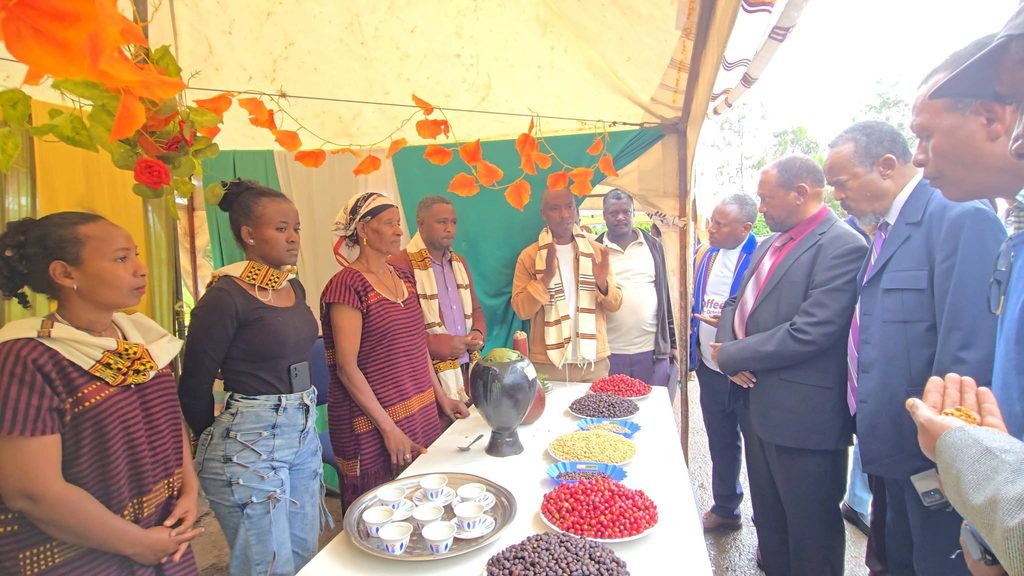
A major component of the celebration was the interactive Coffee Exhibition, which provided a shared platform for coffee-sector actors to present products, technologies, activities, and opportunities. Kerchanshe Group, TechnoServe, and other governmental and non-governmental organizations participated, alongside coffee suppliers, commercial exporters, smallholder producers, technical trainees, and agricultural development partners. Representatives associated with Abaya–Guji, Dara–Sidama, and Gedeo also contributed to the exhibition through cultural coffee presentations and related activities.
In his closing remarks, Dilla University Vice President for Academic Affairs Tamirat Beyene (Dr.) emphasized the need to sustain multi-stakeholder collaboration and translate research and conference discussions into concrete policy and practical applications. He stressed that scientific research and innovation generated through coffee-related work can provide important inputs for national policy and called upon international, national, and private-sector partners to work with Dilla University. Ultimately, the conference reaffirmed the message of the global theme: coffee can indeed be part of the solution when knowledge, innovation, communities, institutions, and industry work together. For Dilla University, International Coffee Day 2026 was therefore not simply a celebration of coffee, but a platform for advancing research, collaboration, sustainable development, and shared value creation across the coffee value chain.